
Optimizing Testosterone for a Century of Strength
Why Testosterone Optimization for Longevity Matters More Than You Think
Testosterone optimization for longevity is the practice of restoring and maintaining healthy testosterone levels to protect muscle, bone, metabolism, heart health, and cognitive function as you age — and it’s one of the most evidence-backed strategies available for men who want to stay strong and vital well into their later decades.
Here’s what you need to know at a glance:
- Who it’s for: Men experiencing fatigue, muscle loss, weight gain, low libido, mood changes, or cognitive decline — especially after age 40
- What it involves: Diagnosing testosterone deficiency through blood tests, then using lifestyle strategies and/or medical therapy to restore levels to a healthy physiological range
- Why it works: Testosterone regulates body composition, bone density, insulin sensitivity, cardiovascular function, and brain health simultaneously
- How to get started: Work with a specialist to measure your levels (ideally before 11 a.m.), assess symptoms, and build a personalized plan
Testosterone doesn’t just affect your gym results. It’s a systems-level hormone — one that quietly governs how your body ages across almost every major organ system.
The decline starts gradually. After age 30, total testosterone falls by roughly 1.6% per year. Free testosterone — the biologically active form your body actually uses — drops even faster, at 2–3% per year. By their 60s, about 1 in 5 men have total testosterone levels below the normal range. By their 80s, that number climbs to 1 in 2.
For many men, that slow decline gets written off as “just aging.” Low energy? Normal. Belly fat that won’t budge? Normal. Difficulty building muscle? Normal. Brain fog? Normal.
But normal doesn’t mean inevitable — and it certainly doesn’t mean harmless.
Research tracking over 24,000 men found that those with the lowest testosterone levels faced significantly higher risks of dying from cardiovascular disease. Other studies link low testosterone to insulin resistance, bone loss, depression, and cognitive decline.
The good news: this is a treatable condition. And treating it — the right way, with proper medical supervision — can meaningfully change your health trajectory.

Understanding Late-Onset Hypogonadism and the Aging Process
When we talk about age-related hormonal decline in men, we often use the clinical term Late-Onset Hypogonadism (LOH). Unlike the sudden hormonal shift women experience during menopause, LOH is a slow, “gravitational” slide. It is defined as a clinical and biochemical syndrome associated with advancing age and characterized by a deficiency in serum testosterone levels.
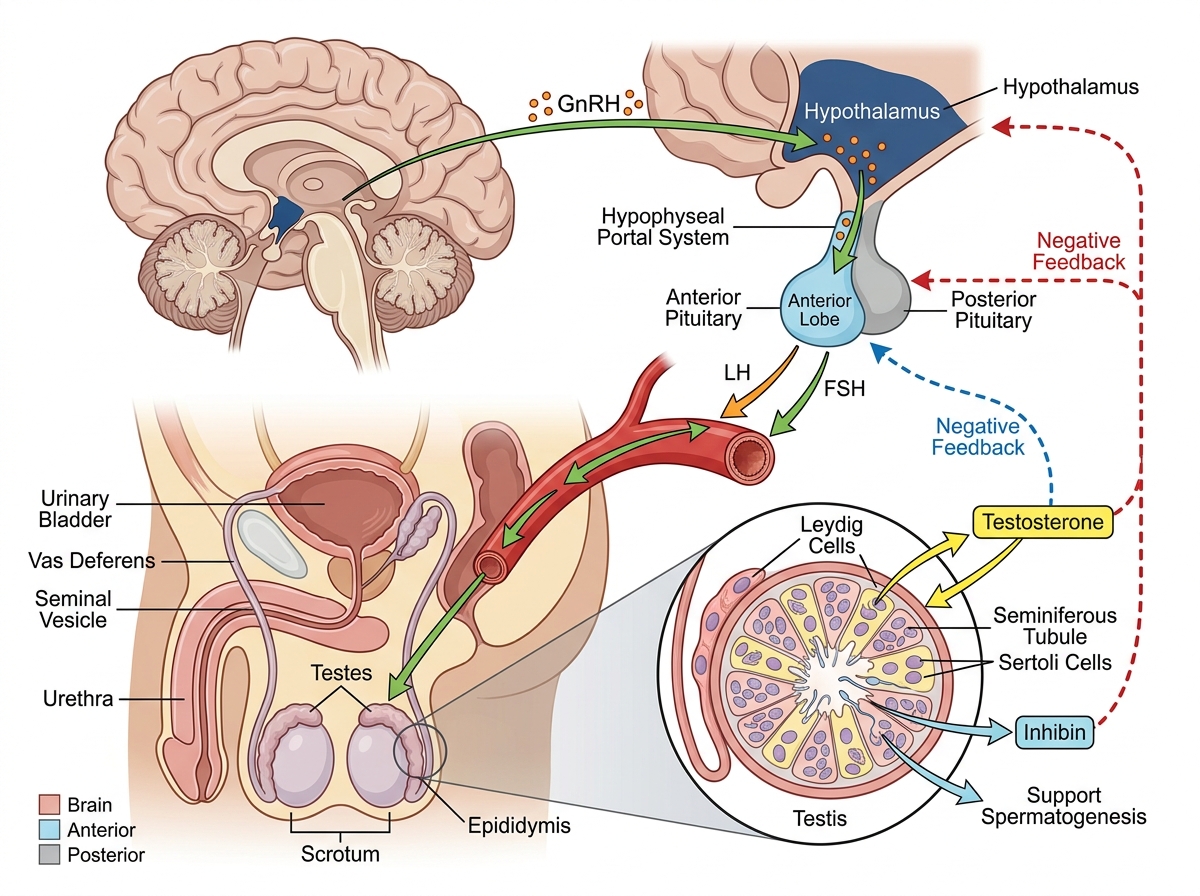
But how do we distinguish LOH from “just getting older”? Normal aging involves a gradual reduction in many physiological capacities, but LOH specifically impacts the quality of life and the function of multiple organ systems. It isn’t just about feeling a bit tired; it’s about a measurable failure of the Leydig cells in the testes to produce adequate hormone, often coupled with a “resetting” of the brain’s signaling system.
The mechanics are complex. As we age, the concentration of Sex Hormone-Binding Globulin (SHBG) tends to rise. SHBG is a protein that acts like a sponge, soaking up testosterone and making it unavailable for your cells to use. This is why a man might have a “normal” total testosterone level but still feel terrible—his free and bioavailable levels (the parts that actually do the work) are in the basement. According to scientific research on testosterone for the aging male, this distinction is critical for an accurate diagnosis.
The Science of Testosterone Optimization for Longevity
To determine if a man is a candidate for testosterone optimization for longevity, we look at specific biochemical thresholds. While “normal” ranges in commercial labs can be frustratingly broad (sometimes spanning from 250 to 1,100 ng/dL), clinical consensus provides clearer goalposts:
- Below 8 nmol/L (approx. 230 ng/dL): Almost invariably indicates hypogonadism.
- 8–12 nmol/L (230–350 ng/dL): A “grey zone” where many men experience significant symptoms and may benefit from a trial of therapy.
- Above 12 nmol/L (350 ng/dL): Generally considered normal, though optimization might still focus on lifestyle factors if symptoms persist.
The diagnosis isn’t just a number on a page. It requires a clinical correlation—meaning we look at the whole person. Are you losing height (bone density)? Is your waist circumference growing despite exercise? Is your morning motivation gone? These are the real-world markers of a system out of balance.
Clinical Benefits of Testosterone Optimization for Longevity
If we think of testosterone as the “general contractor” of the male body, optimization is like giving that contractor the budget and materials needed to keep the building from falling apart. When levels are restored to a healthy physiological range, the benefits ripple through every tissue.
One of the most immediate shifts is in body composition. Testosterone is a potent driver of muscle protein synthesis. Research shows that older men are just as responsive as younger men to the anabolic effects of testosterone. By increasing lean mass and decreasing visceral fat (the dangerous fat around your organs), we aren’t just helping you look better in a t-shirt; we are improving your metabolic resilience.
Furthermore, the impact on skeletal integrity is profound. Osteoporosis isn’t just a “woman’s disease.” Men with low testosterone are at a significantly higher risk for hip and vertebral fractures. A meta-analysis of trials found that testosterone treatment produces a significant increase of 2.7% in lumbar spine bone mineral density. In the context of longevity, preventing a hip fracture in your 70s is one of the single most important things you can do to extend your life.
Metabolic Health and Disease Prevention
The relationship between testosterone and metabolic health is a two-way street. Obesity and insulin resistance lower testosterone, and low testosterone makes it harder to lose weight and manage blood sugar. We call this the “hypogonadal-obesity cycle.”
By breaking this cycle through testosterone optimization for longevity, we see remarkable improvements in:
- Insulin Sensitivity: Testosterone helps your cells use glucose more effectively.
- Type 2 Diabetes Management: Studies have shown that hypogonadal men with diabetes who receive testosterone therapy see improvements in HbA1c and fasting blood sugar.
- Lipid Profiles: While the effects on cholesterol can vary, optimization often leads to a reduction in total cholesterol and potentially “bad” LDL cholesterol.
Research on testosterone and insulin interrelation suggests that low testosterone is actually a strong predictor for the future development of metabolic syndrome and Type 2 diabetes. Addressing the hormone deficiency isn’t just treating a symptom; it’s a preventative strike against chronic disease.
Cardiovascular Vitality and Cognitive Protection
For years, there was a lingering fear that testosterone might harm the heart. However, modern large-scale studies, like the TRAVERSE trial, have largely put those fears to rest, showing no increased risk of major adverse cardiovascular events when therapy is properly managed.
In fact, testosterone may be cardioprotective. It acts as a vasodilator, meaning it helps blood vessels relax and open up. This is partly because testosterone can block L-type calcium channels in the vascular smooth muscle. For men with stable angina or chronic heart failure, scientific research on coronary vasomotor regulation indicates that testosterone can improve the “ischemic threshold”—essentially allowing the heart to do more work with less stress.
Enhancing Mental Clarity through Testosterone Optimization for Longevity
“Brain fog” is one of the most common complaints we hear from aging men. They describe a loss of “edge,” difficulty focusing, and a decline in spatial memory (like finding your car in a large parking lot).
Testosterone has neuroprotective properties. It has been shown to reduce the toxicity of beta-amyloid, the protein plaque associated with Alzheimer’s disease. A longitudinal assessment of free testosterone and cognition found that higher free testosterone levels were predictive of better memory performance and cognitive status over time. By optimizing these levels, we aim to preserve not just the body, but the mind that inhabits it.
Sexual Function and Quality of Life
While we emphasize the “boring” stuff like bone density and insulin, we know that for many men, sexual health is the primary motivator. Testosterone is the fuel for libido (desire) and plays a supporting role in erectile function.
Interestingly, many men who find that PDE-5 inhibitors (like Viagra or Cialis) aren’t working as well as they used to often have underlying low testosterone. Restoring testosterone can often restore the effectiveness of these medications by improving blood flow and nitric oxide signaling in the pelvic tissues.
Treatment Modalities and Safety Monitoring
At Revive Life in Schaumburg, IL, we believe that there is no “one size fits all” approach to hormone health. We offer several delivery methods to ensure the treatment fits your lifestyle and your biology.
| Method | Advantages | Disadvantages |
|---|---|---|
| Topical Gels | Easy to apply, steady blood levels, mimics natural rhythm. | Risk of transfer to others (children/pets), daily application required. |
| Intramuscular Injections | Highly effective, cost-efficient, dose is easily adjusted. | Requires needles, can cause “peaks and valleys” in energy if not timed correctly. |
| Subcutaneous Pellets | “Set it and forget it” (lasts 3–6 months), very consistent levels. | Requires a minor office procedure for insertion. |
| Oral (Modern) | No needles or transfer risk, convenient. | Must be taken with food, usually twice daily. |
| Restoration (hCG/Enclomiphene) | Stimulates your own production, preserves fertility. | Depends on your body’s ability to respond to signals. |
For many men interested in testosterone optimization for longevity, we explore “restoration” strategies first. Options like Enclomiphene or hCG (Human Chorionic Gonadotropin) can trick the brain into sending stronger signals to the testes, encouraging your body to produce its own testosterone rather than relying entirely on an outside source.
Ensuring Safety: Monitoring and Contraindications
Safety is our absolute priority. Hormone optimization is not “steroid abuse”—it is a medical discipline focused on restoring balance. To do this safely, we follow strict monitoring protocols based on scientific research on TRT risks and monitoring recommendations.
- PSA (Prostate-Specific Antigen): We monitor PSA and perform digital rectal exams (DRE) every three months for the first year, then annually. While testosterone does not cause prostate cancer, it can act as “fuel” for a pre-existing tumor, so we must be vigilant.
- Hematocrit: Testosterone stimulates red blood cell production. If your blood gets too “thick” (polycythemia), it can increase the risk of clots. We monitor this closely and adjust doses or recommend therapeutic blood donation if levels approach 52-54%.
- Estradiol: Because some testosterone naturally converts to estrogen, we keep an eye on these levels to prevent side effects like nipple sensitivity or excessive fluid retention.
- Sleep Apnea: Testosterone can sometimes worsen untreated obstructive sleep apnea. We screen for this and ensure it’s managed alongside your hormones.
Frequently Asked Questions about Testosterone Optimization
What are the normal testosterone levels for aging men?
As we mentioned, “normal” is a relative term. However, biochemical hypogonadism is generally diagnosed when total testosterone is consistently below 8–12 nmol/L (approx. 230–350 ng/dL) in the presence of symptoms. Our goal at Revive Life is to help you reach a “high-normal” range—typically 500 to 900 ng/dL—where most men report feeling their best.
Does testosterone therapy increase the risk of prostate cancer?
The current weight of evidence suggests that testosterone therapy does not increase the risk of developing prostate cancer. In fact, some research on testosterone and prostate cancer risk has shown that men with very low testosterone may actually be at risk for more aggressive forms of the disease. However, because testosterone can stimulate the growth of existing cancer, it is contraindicated in men with known or strongly suspected prostate carcinoma.
How does TRT contribute to overall lifespan?
TRT contributes to longevity by acting as a “force multiplier” for health. By preserving muscle mass (preventing sarcopenia and frailty), maintaining bone density (preventing fractures), and improving metabolic stability (preventing diabetes and heart disease), we are effectively extending your “healthspan”—the number of years you live in a functional, vibrant state.
Conclusion
At Revive Life in Schaumburg, IL, we don’t just treat numbers; we treat people. We understand that testosterone optimization for longevity is about more than just a prescription. It is a holistic journey that involves “dialing in” your nutrition, mastering your sleep, and engaging in the right kind of physical activity.
Our science-backed, personalized protocols are designed to treat the root causes of your symptoms, helping you reclaim the energy and strength of your younger years while building a foundation for a long, healthy future. Whether you are in Chicagoland or right here in Schaumburg, our team is ready to help you unlock your biology.
Ready to see if hormone optimization is the missing piece of your longevity puzzle?
Learn more about our TRT Testosterone Therapy services Explore our approach to Longevity and Lifestyle Read about Bioidentical Hormone Replacement Therapy Find out if TRT causes hair loss